If you’ve ever slipped on a wet grocery store floor, tripped over a broken pavement, or been injured by a dangerous condition on someone else’s property, you may have heard the term premises liability. But what is premises liability, when does a property owner become legally responsible for an injury, and how can premises injury lawyers help?
The answer is often more complicated than people realize.
Many injury victims assume an accident was simply bad luck. Others blame themselves for not seeing a hazard. However, property owners, businesses, landlords, cities, and event organizers all have legal obligations to keep their premises reasonably safe for visitors. When they fail to do so, serious injuries can occur.
At Insider Accident Lawyers, we regularly help people who have been injured because a property owner failed to identify, repair, or warn about a dangerous condition. Understanding how premises liability works and what premises injury lawyers do can help you protect your rights and determine whether you may have a valid claim.
What is Premises Liability?
Premises liability is a legal concept that holds property owners and occupiers responsible when someone is injured because of an unsafe condition on their property.
According to Insider Accident Lawyers President Shawn Rokni, Esq., the concept is actually quite straightforward:
“Premises liability cases are about unsafe conditions.”
In practical terms, premises liability law applies whenever a dangerous condition on a property exists and causes injury to someone who has a legal right to be there.
These cases can occur in:
- Grocery stores
- Shopping malls
- Apartment complexes
- Hotels
- Restaurants
- Parking lots
- Sidewalks
- Office buildings
- Construction sites
- Private homes
- Public parks
- Government-owned properties
The central question is often whether the property owner knew about the danger and failed to address it. It is also possible that the property owner should have been aware of the danger, such as when it has existed for long enough that a reasonable property owner exercising ordinary care would have discovered or fixed it.
Three Elements of a Premises Liability Claim
Not every injury on someone else’s property automatically results in a lawsuit. For a premises liability claim to succeed, certain legal elements generally must be established.
Shawn explains:
“There are three elements that must be met for a defendant to be liable and have to pay or compensate an injured victim.”
1. An Unreasonable Risk of Harm Existed
First, there must be a dangerous condition that creates an unreasonable risk of injury.
Examples include:
- Wet floors
- Broken stairs
- Uneven sidewalks
- Hidden holes
- Falling merchandise
- Poor lighting
- Exposed wiring
- Loose handrails
As Shawn explains:
“The condition creates an unreasonable risk of harm.”
Not every condition qualifies. A clearly visible parking block, for example, may not constitute an unreasonable danger because most people expect it to be there.
2. The Property Owner Knew or Should Have Known About It
The second requirement is notice.
A property owner may be liable if they:
- Created the dangerous condition themselves
- Actually knew about it
- Should have discovered it through reasonable inspections
For example, if a store employee spills water on the floor, the store may automatically be considered aware of the hazard because its own employee created it.
Similarly, if a dangerous condition exists long enough that a reasonable inspection would have discovered it, liability may still apply. Premises injury lawyers can help determine if that was the case.
3. The Property Owner Failed to Fix or Warn About the Danger
Finally, a property owner must have failed to take reasonable action.
That could mean:
- Not repairing a defect
- Not cleaning up a spill
- Not placing warning signs
- Not restricting access to a dangerous area
When property owners ignore known hazards, they may be held responsible for resulting injuries.
Why Premises Liability Laws Exist
Many people mistakenly believe that premises liability lawsuits are about blaming property owners for accidents.
In reality, these laws exist because property owners generally have far greater knowledge about their property than visitors do. Senior Litigation Attorney at Insider Accident Lawyers, Edward Yim, Esq. explains:
“If you are holding your property out and inviting people onto your property, it’s presumed you know what’s going on on your property… The law understands a landowner is going to know more about the property than any invitee who enters that property.”
Think about it from a visitor’s perspective. A customer walking into a store has no way of knowing whether:
- A staircase has structural defects
- Merchandise is stacked improperly
- A sidewalk has become dangerously uneven
- Water has been sitting on the floor for hours
Property owners are generally in the best position to identify these dangers before someone gets hurt.
Common Examples of Premises Liability Cases
Premises liability encompasses much more than traditional the slip and fall accidents most commonly associated with it.
Slip and Fall Accidents
Slip and falls remain among the most common premises liability claims.
These often involve:
- Water spills
- Leaking refrigerators
- Recently mopped floors
- Ice accumulation
- Oil or grease spills
Edward describes these incidents as particularly dangerous:
“A person walking and suddenly slipping on a substance like water, oftentimes those result in the most serious injuries that we see.”
Many people underestimate how serious these accidents can be.
As Shawn notes:
“When you say ‘slip and fall’ everyone thinks, ‘Okay, maybe your back hurts a little bit.’ That’s not the case. These falls can cause serious injuries.”
Hidden Structural Defects
Some dangers are completely concealed from view. Edward recalls a case he had involving a carpet covered floor:
“When my client stepped in that area, the foot went right through the carpet into the floor. That’s a condition they would not otherwise have known about, so it would be up to the property owner to warn that person.”
These hidden defects often create particularly strong claims because victims have little or no opportunity to avoid the danger.
Sidewalk Defects
Broken sidewalks frequently cause serious injuries.
Tree roots, soil movement, and aging infrastructure can create dangerous elevation changes that cause pedestrians to trip unexpectedly.
Cities and municipalities may sometimes be liable if they fail to maintain public walkways properly.
Falling Merchandise
Improperly stacked merchandise can create substantial risks for shoppers.
Heavy items falling from shelves may cause:
- Concussions
- Traumatic brain injuries
- Neck injuries
- Facial fractures
- Shoulder injuries
These incidents are often preventable through proper employee training and safe stocking procedures.
Dangerous Staircases
Broken steps, loose handrails, poor lighting and code violations can transform a staircase into a serious hazard.
Because falls on stairs often involve multiple points of impact, injuries can be severe.
What Injuries Are Common in Premises Liability Cases?
One of the biggest misconceptions about premises liability claims is they involve only minor injuries.
In reality, property-related accidents frequently result in life-changing physical harm.
As Shawn explains:
“When you’re in an auto accident… which is a common way people get injured and call personal injury lawyers. You have airbags, you have a car protecting you… In a slip and fall case, you don’t have anything in between your head and the concrete floor.”
Common injuries include:
- Broken ankles
- Fractured wrists
- Hip fractures
- Knee injuries
- Concussion
- Traumatic brain injuries
- Herniated discs
- Spinal cord injuries
- Shoulder injuries
- Facial fractures
In severe cases, victims may require surgery, extensive rehabilitation, or long-term medical care.
What Is an “Open and Obvious” Hazard
One defense property owners frequently raise is that the danger was “open and obvious.” In other words, they argue that the injured person should have seen the condition and avoided it.
This can be a complex issue.
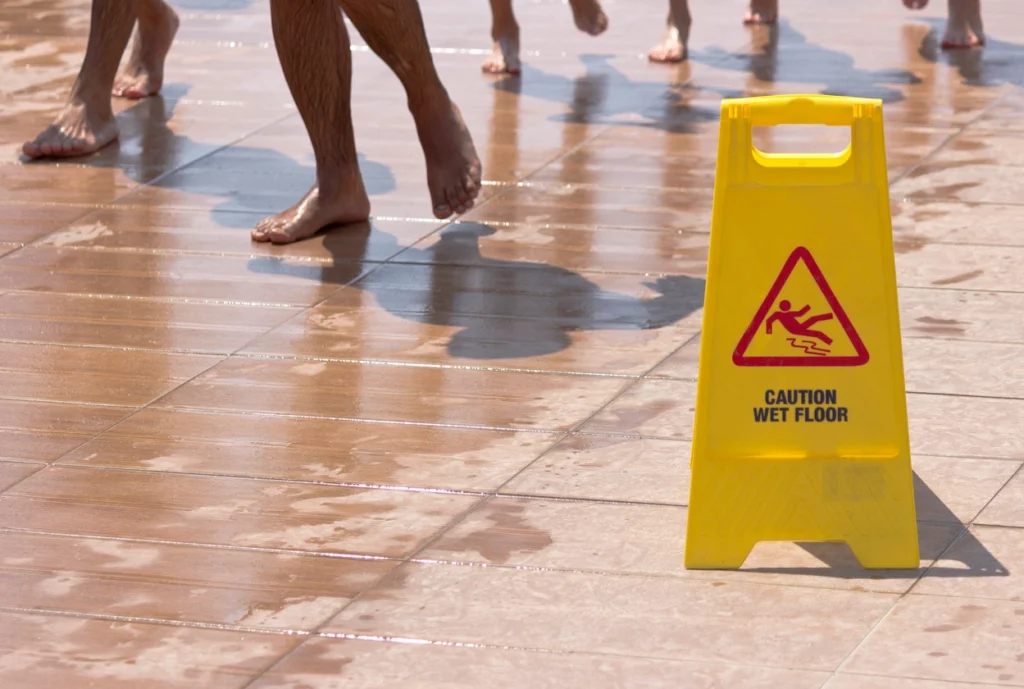
A bright yellow wet floor sign placed directly in front of a spill may strengthen a property owner’s defense.
However, many hazards are not nearly as obvious as property owners claim.
For example:
- Clear liquids often blend into flooring
- Poor lighting may conceal defects
- Hidden structural problems are impossible to detect
- Falling merchandise may provide no warning at all
As Edward explains:
“Sometimes the condition is not open and obvious because it blends in with the floor.”
Shawn summarized the issue this way:
“The common factor here is the person who’s walking could not have seen it coming, as a reasonable person, and could not avoid the danger.”
Ultimately, every case depends on its specific facts. Premises injury lawyers can provide clarity and understanding in complicated cases.
The Evidence That Can Make or Break a Premises Liability Claim
Evidence is often the deciding factor in a personal injury case. Even a legitimate claim can become difficult to prove if critical evidence disappears. That is why acting quickly after an accident is so important.
According to Shawn:
“You want people to take pictures of it. You want them to preserve that evidence so the attorney can evaluate the condition. A picture of it, a video of it, can be really helpful if there’s something wrong with that premises.”
Helpful evidence may include:
Photographs
Photos can document:
- Wet floors
- Broken stairs
- Damaged sidewalks
- Missing warning signs
- Poor lighting
- Hazardous property conditions
Videos
Video footage can provide powerful proof of what occurred before, during, and after an accident.
Edward emphasizes:
“Most companies have a retention schedule for surveillance footage. What I’ve come to experience is they’ll tell me: ‘If nothing happens then we don’t keep that video.’ … Video evidence is one piece of evidence that seems to disappear relatively quickly.”
Many businesses automatically overwrite surveillance footage after a short period of time, unless they receive a notice not to.
Witness Statements
Witnesses can help establish:
- How the accident occurred
- How long the condition existed
- Whether employees knew about the hazard
- Whether warnings were present
Incident Reports
Many businesses create internal reports following accidents.
These reports contain valuable information regarding the accident and the company’s response and can be used to support your case.
How Insurance Companies Handle Premises Liability Claims
Many injury victims assume insurance companies will automatically do the right thing. Unfortunately, that is not always the case. Which is where premises injury lawyers come in.
According to Shawn:
“The adjuster is going to act like a friend. They’re not going to act like they’re trying to save their own company money. They’re going to say, ‘We want to take care of you. We want to pay your medical bills.’ They’re going to be very nice and friendly, but their intention is to resolve that case and get a release signed.”
Insurance adjusters may appear sympathetic and helpful. However, their primary goal is often to resolve claims as quickly and inexpensively as possible.
This may involve:
- Requesting recorded statements
- Seeking broad medical authorizations
- Offering quick settlements
- Encouraging victims to sign releases
One of the biggest dangers is settling too early. As Shawn explains:
“Once they have a signed release of your claims, you cannot bring an injury claim later.”
Even if your condition worsens or surgery becomes necessary months later, a signed release may prevent additional recovery.
Edward offered similar advice:
“You need to make sure you are completely healed before we start talking settlement. Because once you sign that release… you can’t go reopen it later.”
Don’t Blame Yourself
Many injured people feel embarrassed after a fall. Others assume that the accident must have been their own fault. This emotional reaction is understandable, but it’s not always accurate.
Edward often tells his clients:
“You are entitled to walk around a store and do that safely.”
Customers, guests, tenants, and visitors have the right to expect reasonably safe premises. When dangerous conditions exist, responsibility should rest with the party who failed to address them.
Edward encourages injured victims not to rush to self-blame:
“This is not your fault. All you were doing was walking and shopping.”
This simple statement captures an important principle of premises liability law. People should not suffer serious injuries because businesses, landlords, or property owners fail to maintain safe conditions.
When Should You Contact Premises Injury Lawyers?
Many people wait too long before contacting an attorney. Unfortunately, delays can allow critical evidence to disappear. Even if you are unsure whether you have a case, speaking with an attorney can provide clarity.
A free consultation can help determine:
- Whether negligence occurred
- Who may be responsible
- What evidence should be preserved
- What compensation may be available
What is Premises Liability? The Bottom Line
At its core, premises liability is about accountability.
Property owners who invite people onto their premises have a legal responsibility to identify, repair, and warn about dangerous conditions. When they fail to do so and someone gets hurt, contacting premises injury lawyers may provide a path towards compensation and justice.
If you or a loved one has been injured because of unsafe property conditions, the experience team at Insider Accident Lawyers can help evaluate your case, preserve critical evidence, and fight for the compensation you deserve.
About the Author

Emily Stone
Emily Stone is a Legal Content Writer at Insider Accident Lawyers, where she specializes in translating complex legal topics into engaging and accessible content. She holds a B.A. in Creative Writing from York St John University in the United Kingdom (though she’s now LA-based) and is passionate about helping readers better understand their legal options through informative, reader-friendly writing.