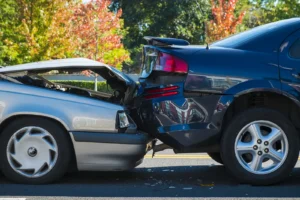
Being involved in a hit and run motor vehicle accident can leave you feeling shocked, angry, and unsure of what to do next. One moment you’re driving normally and the next you’re dealing with injuries, vehicle damage, and the devastating realization that the responsible driver has fled the scene.

While a hit and run can make recovering compensation more complicated, it does not mean you are out of options. Taking the right steps immediately after the crash can preserve valuable evidence and significantly improve your chances of making a successful insurance or personal injury claim.
At Insider Accident Lawyers, we help accident victims understand their rights and fight for the compensation they deserve. Here’s everything you need to know about what to do after a hit and run accident.
What is a Hit and Run Motor Vehicle Accident?
A hit and run accident occurs when a driver involved in a collision leaves the scene without:
- Stopping to exchange information
- Checking whether anyone is injured
- Calling emergency services when required
- Reporting the accident to law enforcement
Hit and run accidents can involve:
Regardless of whether the collision appears severe, leaving the scene is illegal and can result in significant criminal penalties.
Stay Calm and Check for Injuries
Your first priority should be safety.
If possible:
- Move your vehicle out of traffic
- Turn on your hazard lights
- Check yourself and any passengers for injuries
- Call 911 immediately
Even if you feel fine, remember that adrenaline can mask pain. Many injuries, including whiplash, concussions, and internal injuries, may not become apparent until hours or even days later.
Call the Police Immediately
One of the most important things you can do after a hit and run accident is file a police report.
Officers may:
- Interview witnesses
- Collect debris
- Search for surveillance footage
- Document skid marks
- Broadcast descriptions of the fleeing vehicle
The police report will also become an important piece of evidence when filing an insurance claim or pursuing compensation.
Never assume the damage is too minor to report.
Try to Remember Everything You Can
The moments immediately after a collision can be chaotic, but every detail matters.
Try to remember:
- Vehicle make and model
- Color
- License plate (even a partial number helps)
- Direction of travel
- Damage to the other vehicle
- Distinctive stickers, decals, or modifications
- Driver description
Write everything down as soon as possible before details begin to fade.
Take Photos of the Scene
Photographs preserve evidence that may disappear quickly.
Capture:
- Damage to your vehicle
- The surrounding roadway
- Traffic signals
- Tire marks
- Debris
- Road conditions
- Visible injuries
Take wide-shots and close-ups from multiple angles. If nearby businesses or homes have security cameras, make note of their locations or better yet, take a photo of them too.
Talk to Witnesses
Independent witnesses can become invaluable after a hit and run.
Ask for:
- Names
- Phone numbers
- Email addresses
Witnesses generally aren’t caught up in the imminent danger of the accident and may notice details you missed, including:
- A license plate
- The driver’s appearance
- The direction the vehicle traveled
- Whether the driver appeared distracted or intoxicated
- Witness testimony can strengthen your claim considerably
Preserve Every Piece of Evidence
Evidence is crucial to proving your case, and it can disappear quickly.
Ensure they you keep copies of all the documents, records, and receipts involved in your case. These may include:
- Medical records
- Bills
- Repair estimates
- Tow receipts
- Prescription receipts
- Photographs
- Police reports
- Insurances correspondence
- Pain level
- Medical appointments
- Missed work
- Daily limitations
These can help demonstrate the full impact of the accident.
Understanding the Importance of Evidence
Many people assume that if the other driver disappeared, they cannot recover compensation. That isn’t necessarily true.
As Insider Accident Lawyers President Shawn Rokni, Esq, explains:
“In a personal injury claim, the burden of proof lies with you, the injured party. That means it’s up to you (or your lawyer) to present enough evidence to convince the insurance company — or a jury if it comes to that — that the other party was negligent and their negligence caused your injuries.”
This is why gathering evidence is so important after a hit and run accident.
You Don’t Need Absolute Certainty
Many accident victims worry that they don’t have enough evidence. However, civil claims use a different legal standard than criminal cases.
As Shawn explains:
“The standard in civil cases is known as the ‘preponderance of the evidence.’ This doesn’t mean you have to prove your case beyond reasonable doubt like in a criminal case. But you do have to show that it’s more likely than not — more than 50% — that your version of the events is true.”
This lower burden of proof means that multiple pieces of evidence, when combined, can create a compelling claim even if the driver is never identified.
Can You Still Receive Compensation?
Yes.
Depending on your circumstances, you may have several options.
Possible sources of compensation include:
Uninsured Motorist Coverage
Many insurance policies include uninsured motorist (UM) protection.
Because the fleeing driver cannot be identified, they are often treated similarly to an uninsured driver.
UM coverage may help pay for:
- Medical bills
- Lost wages
- Pain and suffering
- Future medical treatment
Collison Coverage
Collision coverage may help repair or replace your vehicle regardless of who caused the accident.
Personal Injury Claim
If the driver is eventually identified through some means, you may be able to pursue a personal injury claim against them. Some means of finding the at-fault driver include:
- Police investigations
- Witnesses
- Traffic cameras
- Security footage
- Dashcam recordings
How Investigations Can Identify the Driver
Many hit and run drivers believe they have escaped responsibility.
Fortunately, investigators have access to numerous resources. Evidence may include:
- Traffic cameras
- Business surveillance footage
- Residential security cameras
- Dashcam footages
- Vehicle debris
- Paint transfers
- Eyewitness accounts
- Cell phone records
An experienced attorney can conduct an independent investigation to locate additional evidence and find the driver responsible.
Common Injuries After a Hit and Run Accident
Even relatively low-speed crashes can cause serious injuries.
Common injuries include:
- Whiplash
- Neck injuries
- Back injuries
- Broken bones
- Concussion
- Traumatic brain injuries
- Spinal cord injuries
- Internal bleeding
- Soft tissue injuries
Pedestrians and cyclists often suffer particularly severe injuries because they have little protection during impact.
Mistakes to Avoid
Leaving Before the Police Arrive
Unless you need emergency medical care, remain at the scene until officers arrive.
Delaying Medical Treatment
Insurance companies often argue that delayed treatment means your injuries weren’t serious.
Prompt medical evaluation helps protect both your health and your claim.
Assuming You Have No Case
Many victims in hit and run accidents believe that because the other driver disappeared, they have no legal options.
In reality, insurance coverage and additional evidence may still allow you to recover compensation.
Speaking Too Freely with Insurance Adjusters
Insurance companies may look for ways to minimize payouts. Avoid speculating about fault or minimizing your injuries before speaking with an attorney.
How a Lawyer Can Help
After a hit and run accident, an attorney can:
- Investigate the crash
- Obtain surveillance footage
- Interview witnesses
- Gather medical evidence
- Handle insurance negotiations
- Calculate the full value of your damages
- File a lawsuit if necessary
Having legal representation allows you to focus on recovery while someone else handles the complicated claims process.
Damages You May Be Able to Recover
Depending on your case, compensation may include:
- Medical expenses
- Future medical treatment
- Lost income
- Reduced earning capacity
- Physical pain
- Emotional distress
- Property damage
- Rehabilitations costs
- Permanent disabilities
- Loss of enjoyment of life
Every accident is unique, making an individual case evaluation essential.
Why Acting Quickly Matters
Evidence fades faster than many people realize. Surveillance footage may be overwritten within days. Witnesses become harder to locate. Physical evidence disappears from the roadway. Medical records become less persuasive if treatment is delayed.
The sooner you begin building your case, the stronger it is likely to be.
Contact Insider Lawyers After a Hit and Run Accident
A hit and run accident can leave victims shaken, facing uncertainty, financial stress, and painful injuries. But you do not have to navigate the process alone.
By calling the police, documenting the scene, preserving evidence, seeking medical treatment, and speaking with an experienced attorney, you can protect your rights and maximize your chances of recovering compensation.
At Insider Accident Lawyers, we understand how overwhelming these cases can be. Our team works tirelessly to investigate accidents, gather evidence, negotiate with insurance companies, and fight for the compensation our clients deserve.
If you’ve been injured in a hit and run accident, don’t wait to learn about your legal options. Taking action today could make all the difference in your recovery and your future.
About the Author

Emily Stone
Emily Stone is a Legal Content Writer at Insider Accident Lawyers, where she specializes in translating complex legal topics into engaging and accessible content. She holds a B.A. in Creative Writing from York St John University in the United Kingdom (though she’s now LA-based) and is passionate about helping readers better understand their legal options through informative, reader-friendly writing.