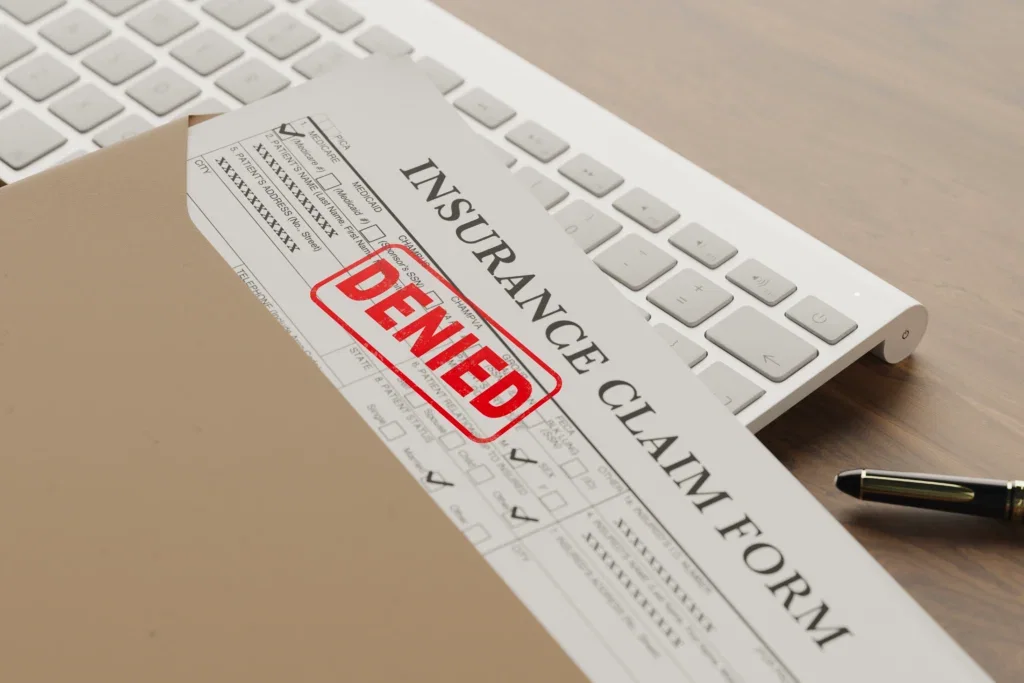
Opening a “Claim Denied” letter after getting rear-ended feels like a rigged game. Insurers rarely give you a straight answer. Instead, they mail a boilerplate rejection citing an obscure policy code and bury you in a phone queue designed to make you quit.
That letter is a business tactic, not a court order. Adjusters bank on injured drivers walking away.
But California law requires auto insurance companies to justify every single rejection, and that rule gives you the leverage to force a second look.
You can beat a denial. We’ll walk you through how to decode the adjuster’s excuses and bypass their stonewalling by filing a grievance with the California Department of Insurance (CDI). We also outline the exact moment it makes sense to let a lawyer take over the fight.
Key Takeaways
- A claim denial is a business decision, not a final legal ruling. You can appeal it.
- California insurers must give you a written, specific reason for any denial, tied to a policy provision or a legal basis.
- You generally have two years from the crash date to sue for injuries, and three years for vehicle damage.
- The California Department of Insurance investigates insurer conduct for free, and filing a complaint costs you nothing.
- A lawyer can step in at any point, but becomes especially useful once the insurer disputes fault entirely or stops responding.
How Do You Appeal a Denied Car Accident Claim in California?
To appeal a denied car accident claim in California, first identify the insurer’s legal or policy reasoning in their written denial letter. Next, rebuild your evidence file to target that specific objection, submit a formal written dispute to their claims department, and escalate the matter to the California Department of Insurance if the company still refuses to settle.
These steps must happen in sequence. Skipping straight to a state complaint without establishing a hard paper trail first will only stall your case.
Step 1: Decode the Denial Letter
California insurance companies cannot simply stamp “denied” on your claim and move on. The Fair Claims Settlement Practices Regulations legally require them to show their work. Every written denial must detail the reason for the rejection and point to the policy provision or legal code backing it up.1
Read the document once just to process the news. Then grab a highlighter and flag these four items:
- The specific reason for denial: Look for details like “driver failed to yield on the 405 southbound” or “chiropractic treatment exceeded expected duration.”
- The exact policy section: Find the specific exclusion clause or California Vehicle Code number they cite as their defense.
- Contact details: Pinpoint the claim number and the adjuster’s direct phone line.
- Your timeline: Highlight the hard deadline to submit an appeal or additional documentation.
Vague letters are a liability for the insurer. A rejection letter that just says “insufficient evidence” without listing exactly what’s missing (such as an LAPD collision report from a rear-end crash) fails state compliance standards.
You can immediately push back on a vague denial and force the adjuster to provide specifics.
Step 2: Rebuild Your Evidence File
Adjusters usually deny claims because their file is thin, not because your case lacks merit. Your next move is to supply the proof the denial letter says is missing.
Depending on the reason given, you need to:
- Track down the amended collision report from the LAPD or CHP. Initial face sheets sometimes miss details, and officers often update the full report weeks after the incident.
- Secure nearby surveillance video before the system automatically overwrites it. A security camera outside a Ventura Boulevard strip mall, for example, might be the only proof the other driver ran a red light.
- Lock down written witness statements immediately. The bystander who saw you get rear-ended at an intersection will forget the timeline details by next month.
- Submit medical records linking your injuries to the impact. If you waited two days to visit a nearby urgent care, you need a doctor’s note explaining the medical reason for that delay.
- Photograph the vehicle damage from multiple angles, focusing on paint transfers or crumpled panels that prove the exact point of impact.
For a deeper dive into preserving what matters, our guide on gathering car accident evidence breaks down the specific documentation you need before it disappears.
Step 3: Submit a Formal Written Appeal
Once you secure that amended LAPD report or the dashcam video from the crash, package those documents into a formal dispute letter.
Never rely on a phone call to change an insurance adjuster’s mind. Venting over the phone leaves zero proof of your dispute.
If you eventually need to escalate the claim to the CDI or file a lawsuit in a downtown LA courtroom, you need a verifiable paper trail.
Send your appeal via certified mail with a return receipt or use a trackable email system. Route the document directly to a claims supervisor or regional manager.
The frontline adjuster already rejected your file once, so you need someone with higher settlement authority to evaluate the new evidence.
(See the dedicated section below on what to actually put in this letter.)
Step 4: Escalate to the California Department of Insurance
If a regional claims manager ignores your certified letter or misses their mandatory 15-day deadline to reply under California law, you still have leverage.
The same applies if they stubbornly uphold the denial despite you handing them clear dashcam proof of the collision.
Your next move is escalating the dispute to the CDI. And filing a Request for Assistance with the state costs nothing.
The department acts as the regulatory watchdog for every auto insurer doing business in the state, and their investigators have the authority to pry open an adjuster’s file.
Top 5 Reasons Insurance Companies Deny Accident Claims in California
Some denials are legitimate. But many are just boilerplate pushback. And adjusters bank on you accepting their first “no” without a fight.
Here’s what they cite most often to reject California claims:
1. The Insurer Disputes Who is at Fault for the Crash
The adjuster argues you caused the wreck, or they try to pin 40% of the blame on you. Because California follows a pure comparative negligence rule, your final payout drops by your percentage of fault.
If the other driver’s insurer can successfully argue you were speeding on Sepulveda when their policyholder ran the stop sign, they save thousands.
You still get paid, but only if someone forces them to calculate that fault accurately.
2. The At-Fault Driver’s Policy Lapsed or Has Exclusions
The insurer claims the responsible driver missed a premium payment, or that the specific car they drove wasn’t listed on their policy (like a roommate’s unlisted Honda Civic they borrowed to run errands).
We see this constantly in uninsured driver collision cases. The company contests the coverage upfront to avoid evaluating your actual injuries.
3. The Adjuster Disconnects Your Injuries from the Collision
You wait a week to visit a Cedars-Sinai urgent care hoping your neck pain will fade. The adjuster uses that gap in treatment to argue your whiplash happened at the gym, not during the rear-end crash on the 5 Freeway.
They’ll look for any reason to separate your medical bills from the accident.
4. You Missed the Policy’s Strict Reporting Deadline
Most insurance contracts bury a rigid reporting window in their fine print.
If you spend three weeks in the hospital recovering from a severe T-bone crash and miss their arbitrary notification deadline, some carriers will use that technicality to deny the entire claim outright.
5. The Insurer Flags Minor Statement Inconsistencies as "Fraud"
You tell the LAPD officer your speed was 35 mph. Two days later, you tell the ER triage nurse you think you were going 40 mph.
Adjusters flag these minor discrepancies (which happen naturally after a traumatic event) as proof that your entire story is unreliable.
An adjuster’s primary job is protecting the insurance company’s loss ratio, not paying out fair settlements. An unappealed denial costs them nothing.
That isn’t a conspiracy theory. It’s the built-in incentive structure of every claims department in California.
When you understand that their first rejection is often a calculated business decision rather than a final legal verdict, you realize exactly why fighting back works.
How to Write a Car Accident Claim Appeal Letter
A strong appeal letter is not a place to vent. Your goal is to give the regional claims manager a documented reason to override the frontline adjuster’s initial rejection. You want to make it obvious that you’re building a formal paper trail for a CDI complaint if they refuse to settle.
Every appeal letter must include:
- Claim and policy numbers: Put these dead center at the very top. If the adjuster has to hunt through their desk of 200 cases to figure out which file you’re referencing, your letter goes straight to the bottom of the pile.
- A direct statement rejecting the denial: Name the exact excuse they used and dismantle it. If they claim you share 50% fault for the collision, state why their liability assessment fails under the California Vehicle Code.
- Specific references to attached evidence: Never write “see attached medical records.” Write “see page four of the enclosed UCLA Medical Center discharge notes dated September 4, which links the lumbar sprain to the rear-end impact.”
- A reasonable response deadline: Give them 15 to 30 days to reply. An open-ended timeline can leave your dispute untouched in a digital queue.
- Your contact information: Make it easy for the supervisor to call you or your attorney with a revised settlement offer.
Keep the tone strictly factual. Firing off an emotionally charged letter often backfires, prompting the insurer to route your file to their Special Investigations Unit just to stall the timeline.
A calm, well-documented letter usually moves faster, because it gives the claims department less reason to dig in.
When Should You File a Complaint with the California Department of Insurance?
The California Department of Insurance acts as the state watchdog for every licensed carrier. They can investigate shady claims-handling tactics and penalize companies for patterns of bad-faith rejections.2
Filing a dispute costs you nothing, and you can submit the paperwork directly through the CDI’s online consumer help center.3
Pull the trigger on a state complaint when:
- The regional claims manager ignores your certified appeal letter or blindly upholds the denial without providing any new legal justification.
- The adjuster misses their mandatory 40-calendar-day deadline under the Fair Claims Settlement Practices Regulations to accept or deny your claim, and they fail to send a valid written extension request.1
- You get bounced around a corporate call center and receive different explanations from three different representatives regarding why your accident claim was rejected.
- The insurer is clearly stalling your file to exhaust your patience or push you dangerously close to California’s two-year statute of limitations.
Keep in mind what the CDI is and isn’t. The department can audit an insurer’s internal file, issue fines, and force corrective regulatory action. They cannot, however, force a carrier to cut you a $50,000 settlement check for your injuries.
What this complaint actually does is create an official state-level record of the insurer’s bad behavior.
That documented paper trail becomes your leverage if you eventually need to escalate the dispute and file a bad faith lawsuit in court.
Timeline and Deadlines for Appealing California Car Accident Denials
Two separate clocks are ticking on your case. One limits how long you have to file a lawsuit in court, and the other dictates how fast the insurance company must process your paperwork.
For your own filing deadlines, the timelines run at different speeds depending on who hit you and what you’re claiming:
- Two years for personal injury lawsuits: If a distracted driver rear-ends you on the 405, your two-year countdown starts the day of the crash.4
- Three years for property damage: If you only need the insurer to pay for a crumpled bumper from a fender-bender, the state gives you three years to sue for vehicle repair costs.5
- Six months for government claims: This is the trap most people miss. If an LA Metro bus, an LAPD cruiser, or a Caltrans utility truck hits you, you only have six months to file a formal administrative claim. Miss this strict window, and your case is permanently barred.
On the insurer’s side, California regulators don’t let adjusters sit on your file indefinitely. Under the state’s Fair Claims Settlement Practices Regulations, once the company receives your proof of claim, they have 40 days to accept or deny it.1
If they need more time to investigate, they must send you a written status update every 30 days explaining the delay.
Track these dates on a calendar. If a desk adjuster ghosts you for two months without sending a written extension, they’re violating state regulations. Documenting those missed deadlines gives you strong leverage and becomes primary evidence if you eventually need to file a bad faith lawsuit.
These are baseline rules. If you can’t figure out when your specific clock runs out, put the file in front of a local attorney rather than guessing. Guessing wrong can cost you your entire settlement.
When Is It Time to Hire a California Car Accident Lawyer?
Many drivers handle a first appeal on their own, and some succeed. But the leverage shifts quickly, usually earlier than people expect.
At Insider Accident Lawyers, our legal team built their careers on the other side of the table. Because they used to work as insurance defense counsel, they know how adjusters operate behind closed doors.
That background changes how they handle your appeal. They don’t just cite state regulations; they know the internal playbook, including:
- The dollar amount an injury claim is typically set at internally before negotiations even begin
- Which boilerplate denial reasons collapse when challenged, and which ones the carrier will spend money to defend
- The difference between a file that’s genuinely under active review and one that a desk adjuster has quietly shelved to run out your clock
Here’s when you need to bring in that leverage:
- The insurer disputes fault entirely, rather than just arguing over the settlement amount
- Your medical bills from a local ER or specialist keep climbing, but the adjuster refuses to acknowledge the injuries are crash-related
- The company pressures you for a recorded statement or demands you sign a blank-check medical records release
- Communication goes dead, or you get bounced between adjusters giving contradictory excuses
- Your CDI complaint hit a dead end
If you’re hitting these roadblocks, it’s time for a conversation. Check our track record of case results to see the settlements our motor vehicle accident and auto accident attorneys have secured for injured drivers across Los Angeles.
Car Accident Claim Denial FAQs
What’s the most common reason car accident claims get denied in California?
Disputed fault. Insurers often argue the claimant shares more responsibility for the crash than the evidence actually supports, especially in intersection collisions and lane-change crashes where accounts differ.
Can I still get paid if my claim was already denied once?
Yes. A denial isn’t final. You can submit a formal written appeal, escalate to the CDI, or in some cases pursue legal action. Submitting new evidence reverses plenty of claims that looked dead on arrival.
Can I sue my insurance company for denying my claim in bad faith?
California allows a first-party policyholder to pursue a bad faith claim against their own insurer if the denial was unreasonable. If your dispute is with the other driver’s insurance company rather than your own, the path forward looks different. An attorney can explain which one applies to your situation.
What if I missed the deadline listed in my denial letter?
Contact the insurer in writing right away and explain the delay. Some deadlines are flexible internal guidelines, not hard legal cutoffs. But don’t assume that without confirming it first, since some really aren’t.
Is filing a complaint with the California Department of Insurance the same as filing a lawsuit?
A CDI complaint is a free regulatory process that can pressure an insurer to correct how it handled your claim. It doesn’t replace a lawsuit and doesn’t guarantee a specific payout, but it can create a useful record if your dispute continues.
A Denial is a Starting Point, Not the End
California’s Fair Claims Settlement Practices Regulations exist because lawmakers already knew insurers would deny claims that should have been paid.
That’s the whole reason the appeal process, the CDI complaint system, and the statute of limitations all exist side by side.
None of it works, however, if you assume the first “no” is final.
If you’re staring at a rejection letter and debating your next move, reach out to Insider Accident Lawyers for a free review.
We’ll evaluate the adjuster’s reasoning and tell you plainly whether the denial is worth fighting and what that fight would look like.
References
- “Fair Claims Settlement Practices Regulations.” California Department of Insurance, State of California, www.insurance.ca.gov/01-consumers/130-laws-regs-hearings/05-CCR/fair-claims-regs.cfm. Accessed 3 Sept. 2026.
- “Laws and Regulations.” California Department of Insurance, State of California, www.insurance.ca.gov/01-consumers/130-laws-regs-hearings/. Accessed 3 Sept. 2026.
- “Consumer Help Center.” California Department of Insurance, State of California, www.insurance.ca.gov/01-consumers/101-help/index.cfm. Accessed 3 Sept. 2026.
- “California Code, CCP 335.1.” California Legislative Information, http://leginfo.legislature.ca.gov/faces/codes_displaySection.xhtml?lawCode=CCP§ionNum=335.1. Accessed 3 Sept. 2026.
- “California Code, CCP 338.” California Legislative Information, https://leginfo.legislature.ca.gov/faces/codes_displaySection.xhtml?lawCode=CCP§ionNum=338. Accessed 3 Sept. 2026.
About the Author

Jerome Garo is a Legal Content Writer at Insider Accident Lawyers, where he turns personal injury law into clear, practical guidance for people recovering after an accident. He has written legal content for U.S. law firms and spent years writing/editing search-focused articles across tech, healthcare, finance, and other complex fields. With a background in communication, copyediting, and SEO, Jerome cuts through legal jargon and explains what readers need to know in plain English.